That’s a good question, which I’m happy to answer.
I’ve had lots of experience taking interview bids from journalists, deciding on the best spokesperson, preparing a media briefing, and then advising the spokesperson.
Here are the steps I take:
- Confirm the topic of the interview.
- Confirm the date, time, venue and format eg live? Pre-recorded? Down the line? In person filming? Via Sky or zoom?
- Confirm the angle the journalist is intending to take. That isn’t always possible, but I’ll dig as much as I can, look at the areas the journalist is currently researching, and take an educated guess.
- Confirm any vetoed questions – any topics which are off the table.
- Prepare a briefing document, including: three key messages we want to put forward; lines to take on the questions I expect to come up; background information, facts, figures and statistics to add substance to our responses; key lines on any problematic areas I think might arise.
- I’ll make sure the spokesperson has a minimum of 24 solid hours to read and absorb the briefing document (ideally 48 hours).
- Once the spokesperson has had time to read and digest the briefing document, I’ll offer to go through questions and answers.
- If they agree to this, I’ll ask questions which I know or expect will be asked, and make sure they are clear on key lines, and know where to find facts and figures to support.
- I’ll make sure they know the three key messages to come back to repeatedly – these are the messages which we want to leave in the viewer’s mind at the end of the interview.
- I’ll repeat the questions, listen and advise until the spokesperson is content.
- I’ll accompany the spokesperson to the interview, support onsite, and make sure the journalist does not touch on any topics they have agreed not to discuss.
- I’ll listen to the interview and take notes.
- After the interview, if the spokesperson wishes, I’ll de-brief and comment on how the interview came across.
- I’ll search across social media and news sites to see what coverage the interview receives, and what the reaction is.
- Later or the next day, I will give the spokesperson and relevant partners a report on coverage and responses to the interview, and any follow-up action I recommend.
Here are some images from interviews I’ve briefed and supported over the years.

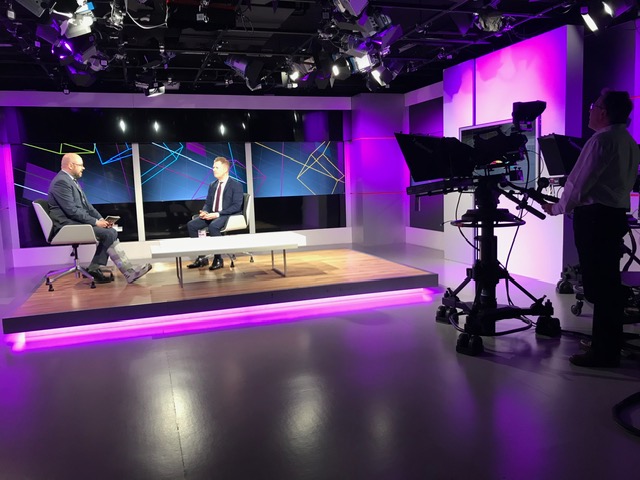
I supported Welsh Government Minister, Jeremy Miles, for a year as press officer. This is a live interview with Adrian Masters for Sharp End, held at the ITV studios in Cardiff in 2019.

This is another interview I briefed Jeremy Miles on. As Brexit Minister in 2019, the Minister answered many questions on the consequences of leaving the EU.
This interview was a ‘pre-rec’ recorded in the Senedd building in Cardiff. Pre-rec interviews are recorded live but not broadcast then and there. Instead, they are broadcast later in the news programme.

Here, Jeremy Miles is leading the Welsh Government’s weekly press conference from the conference room in the Senedd building in Cardiff Bay.
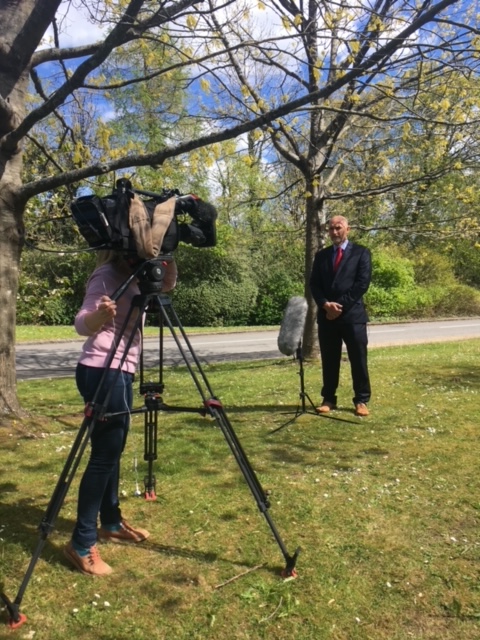
This is Alan Prosser, Director at Welsh Blood Service, during an interview with ITV. This interview was pre-recorded live and led the 6 o’clock news on election day in May 2021.
The film camera-person pictured here filmed ‘as live’, but the interviewer, Jonathan Hill, asked questions ‘down the line’, through an ear piece, and Alan answered aloud. His responses were captured by the camera.
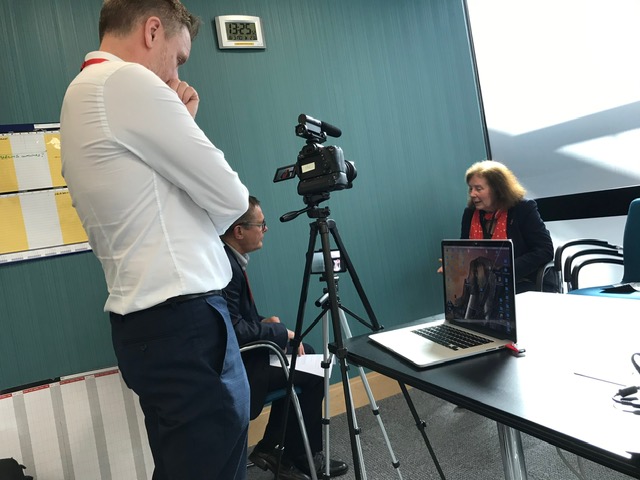
This is Welsh Government Minister Julie Morgan. I supported and advised her during this media training day.
I’ve also briefed and advised senior police officers ahead of two days of ‘as live’ filming for BBC Crimewatch.
I have lots of experience in this area.
I’ll be very pleased to brief, advise and support your spokesperson before, during and after any interview.
 Luminous Words
Leave a comment